Center of Excellence for Kidney Tumour

Management of all Kidney Tumours

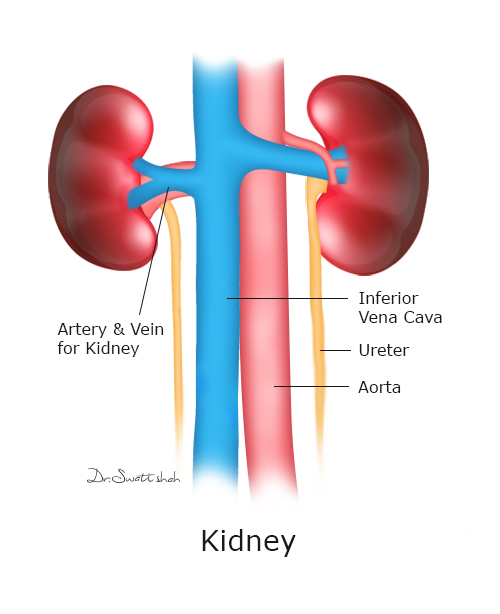
Kidney

Kidney is a bean shaped organ which forms urine. Abnormal growth of cells in Kidney can lead to formation of a tumour. This tumour may be benign or cancer.
 

Types of Kidney Tumours

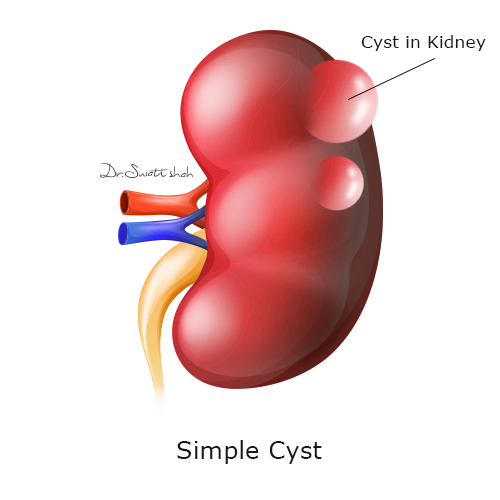
1. Simple Cyst

Cyst means fluid filled lesion in kidney. It is graded from 1 to 5 as per the suspicion of it being cancerous. Grade 1 cysts are simple cysts and can be observed, while the others need to be managed carefully by a Kidney tumour specialist.

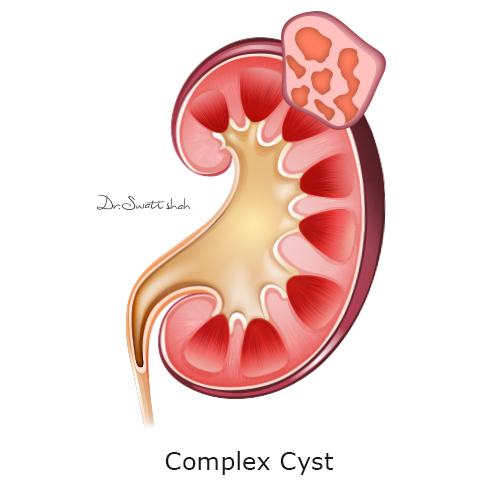
2. Complex Cyst

Even fluid filled cysts can be cancerous and should be managed (Observed/ Removed) carefully by a specialist. Caution should be taken to not to rupture it while removal. 
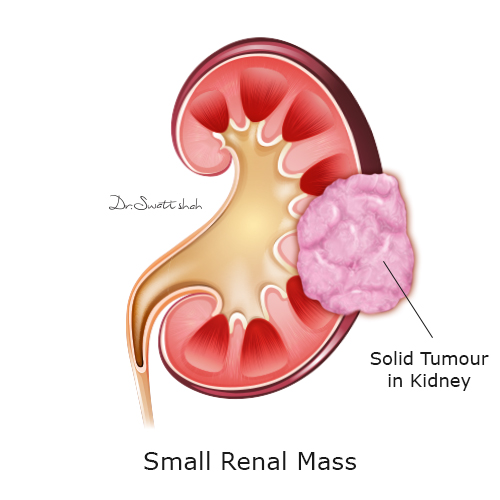
3. Small Renal Mass

Small tumours in kidney are mostly detected incidentally while the patient undergoes Ultrasound/ CT for some other reason. Most of these solid tumours are cancerous. Early detection has triple benefits : a) Partial Nephrectomy (Kidney Saving Surgery) can be done b) Chemo/ Radiation not required c) Prognosis is good

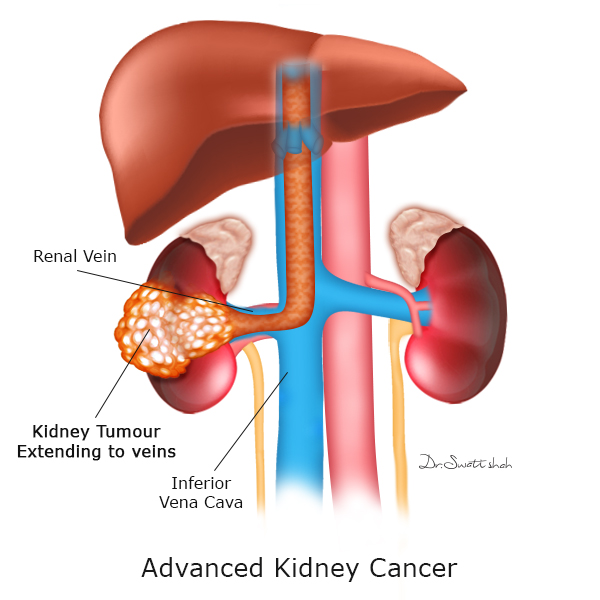
4. Advanced Kidney Cancer

Kidney Tumours may be very big at the time of diagnosis. Sometimes they may involve the major blood vessels near them. 
Kidney Tumour Surgery

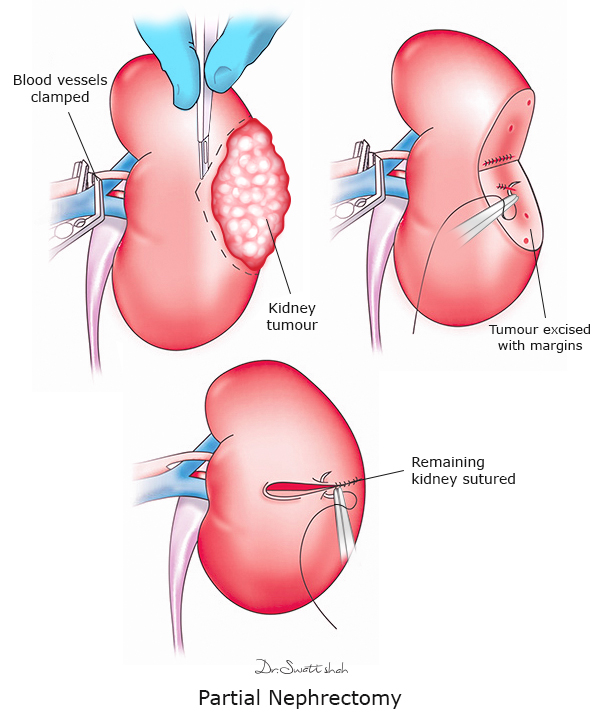
1. Partial Nephrectomy (Kidney Saving Surgery)

1. Partial Nephrectomy 
    (Kidney Saving Surgery)

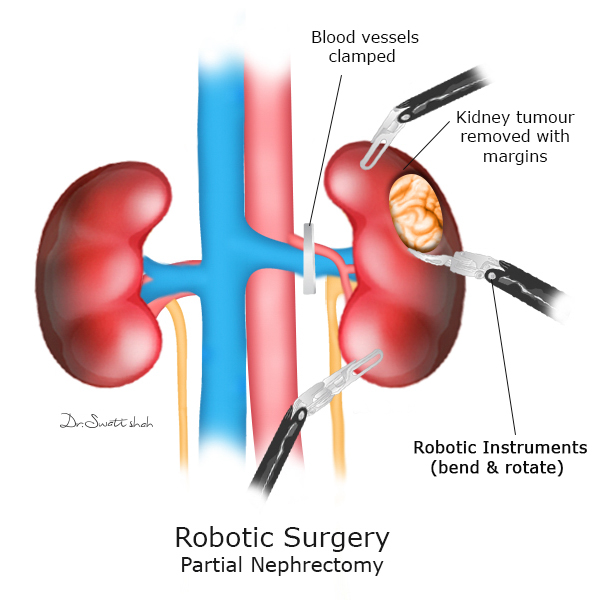
In this Surgery, kidney tumour is removed with some amount of adjoining normal tissue, while rest of the kidney is saved. This is a special surgery requiring expertise and can be done by Open/ Laparoscopic or Robotic approach.


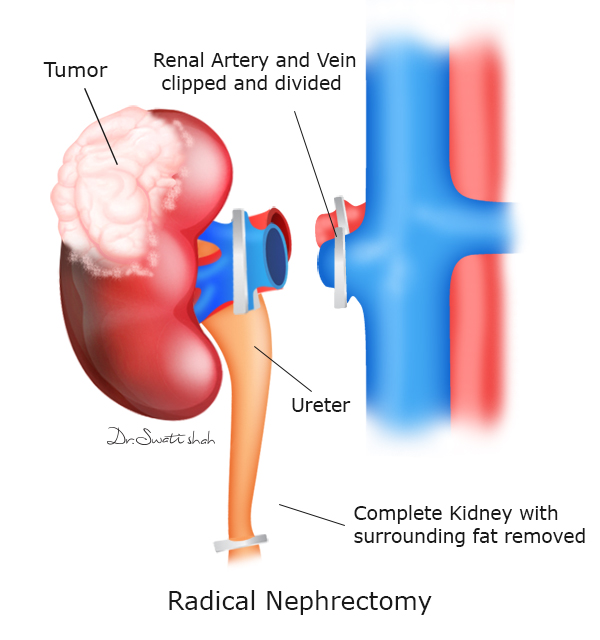
2. Radical Nephrectomy

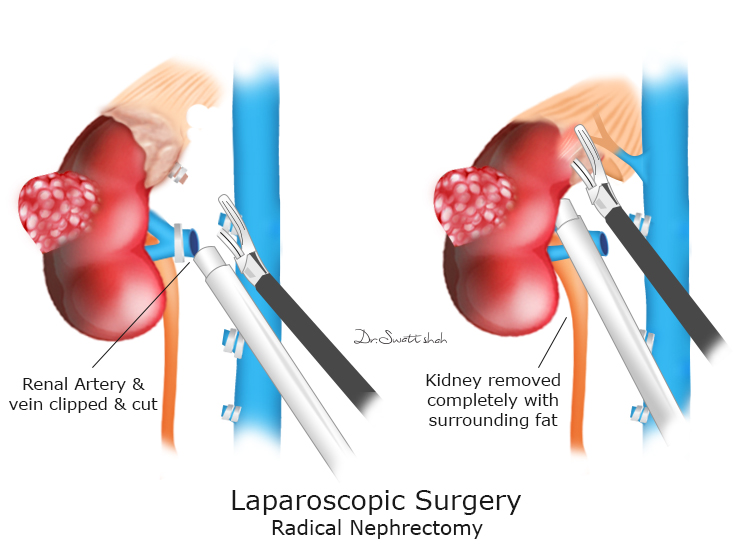
This means removal of kidney with adjoining tissues for large kidney tumours. 


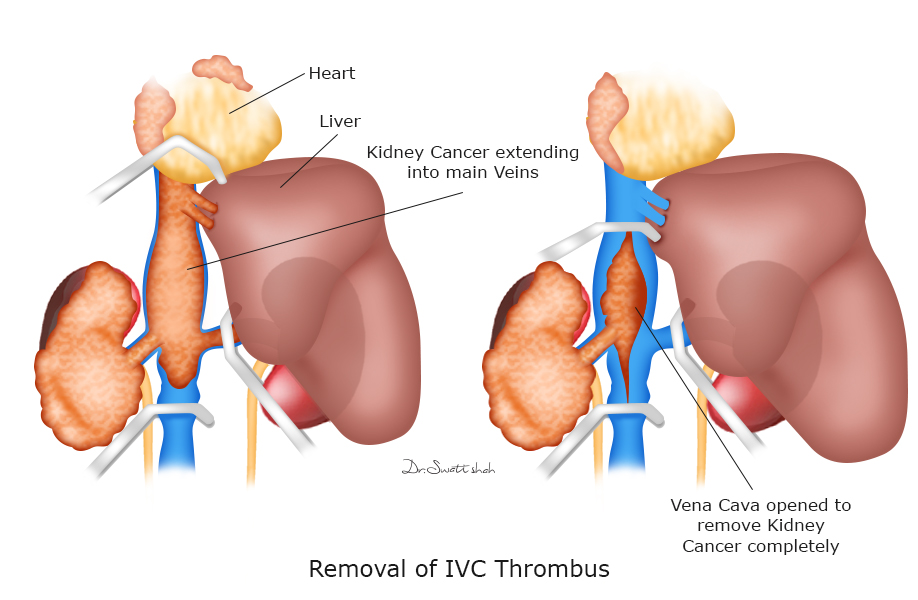
3. Removal of IVC 
     thrombus

Advanced Kidney cancers involving major vein, called Inferior Vena Cava (IVC), can be completely resected. 

3. Removal of IVC 
     thrombus

3. Removal of IVC thrombus

Advanced Kidney cancers involving major vein, called Inferior Vena Cava (IVC), can be completely resected. 

Latest Technology

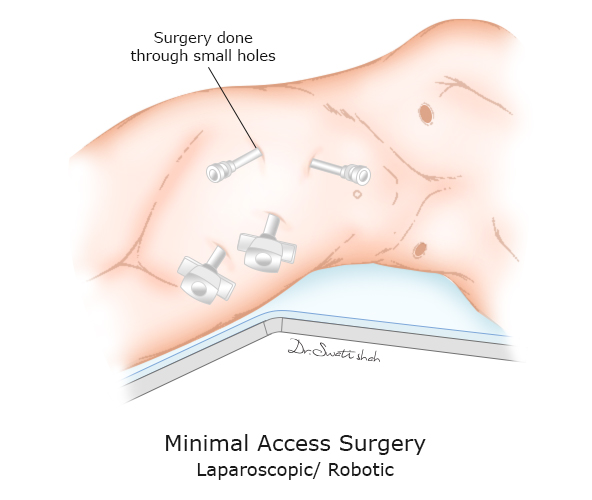
Minimal Access Surgery: 

Instead of a big cut , surgery is performed through small holes in the abdomen. It may be done by Laparoscopic or Robotic approach.

1. Laparoscopic Surgery

Camera and instruments are inserted through small holes and surgery is performed. This reduces pain, blood loss and hospital stay, while it enhances recovery.


2. Robotic Surgery

Robotic Surgery has additional benefits over laparoscopic surgery as it provides Better Vision (3D, 10X magnified) and has better instruments (Flexible, rotate 360 degrees). These greatly help in intricate surgeries like Partial Nephrectomy, to remove the tumour completely while preserving maximal normal kidney tissue. Robotic surgery enhances precision of surgery and recovery of the kidney as well as the patient.